
City of New Britain Criminal Records
A criminal court record is the case-level record kept by the Clerk of the Superior Court after a prosecution is filed. It is broader than a charge list and narrower than every police or correctional record connected to the person. In New Britain, Connecticut, the official public paths are the Judicial Branch criminal/motor-vehicle lookup tools and the Clerk of the Superior Court at the New Britain Judicial District.
Criminal and motor-vehicle matters may involve New Britain Geographical Area 15, the New Britain Judicial District, or another Connecticut location if venue or case type requires it. GA 15 is important for local arraignments, pending cases, daily dockets, and motor-vehicle matters. The New Britain Judicial District handles Superior Court criminal matters and clerk record requests. Police reports remain with the New Britain Police Department unless they become part of a court filing or exhibit.
The pending criminal and motor-vehicle defendant search is one of the main entry points for case-file research.
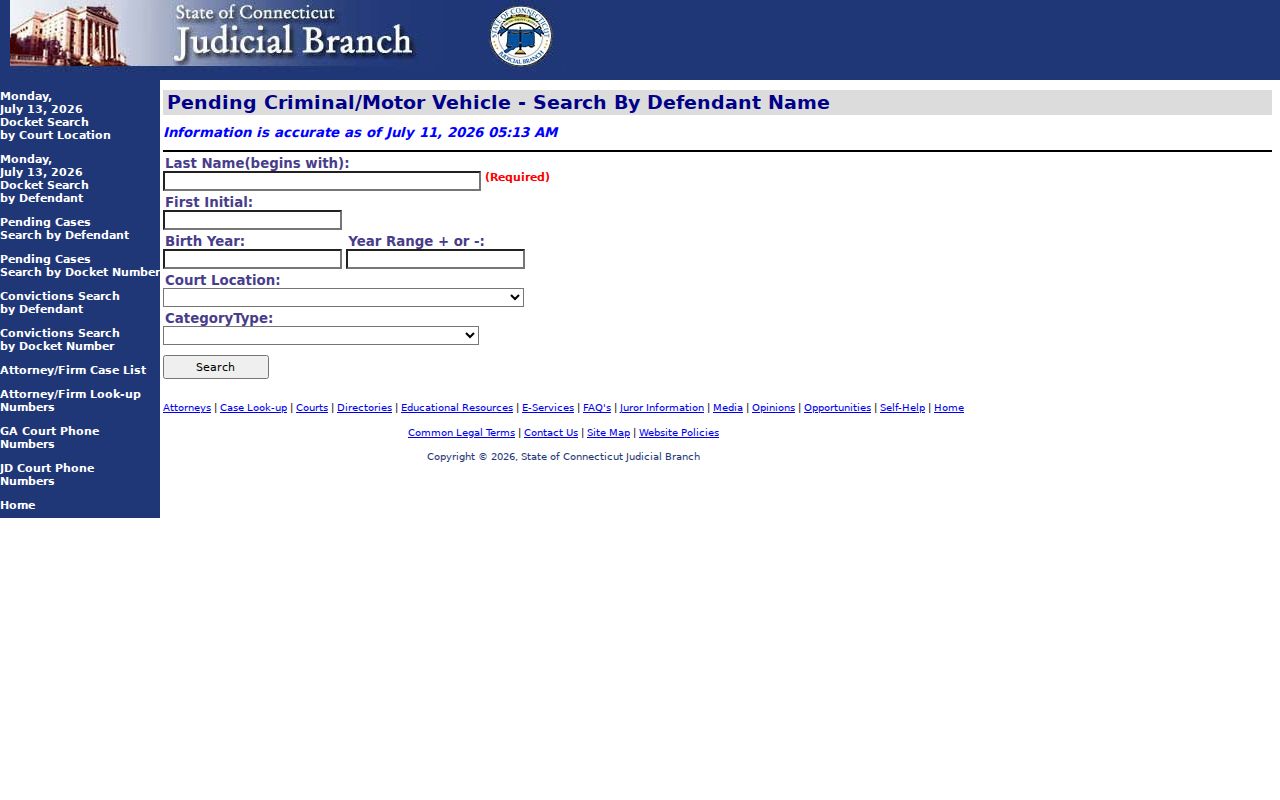
Pending search helps identify open New Britain criminal court records before a final disposition or conviction display exists.
Search New Britain Criminal Court Records
The Connecticut Judicial Branch Criminal/Motor Vehicle Case Look-up separates pending cases, convictions, daily dockets, docket-number searches, attorney/firm lookup, sentence review docket information, and outstanding warrant access. For New Britain criminal court records, use New Britain GA 15 or New Britain Judicial District in the court-location fields when those options apply.
- Open the Judicial Branch criminal/motor-vehicle lookup landing page.
- Choose pending case search, conviction search, daily docket, or docket-number search based on the question.
- Enter the defendant last name, optional first initial, birth year, and birth-year range if searching by name.
- Use New Britain GA 15, New Britain Judicial District, or New Britain Housing as the court location when appropriate.
- Request certified copies, exhibits, or older case documents from the Clerk of the Superior Court when the online docket is not enough.
The criminal portal warns that conviction information is generally displayed for no more than 10 years after sentencing unless Connecticut Practice Book Section 7-13 creates a shorter display period. It also says youthful offender cases, juvenile cases, and infractions or violation convictions are not shown in conviction lookup. Criminal-history information may change due to erasures, corrections, pardons, or other modifications.
New Britain Criminal Case Flow
A criminal case record changes as the case moves. Police may arrest or summons a person, but the court case begins when charges are filed and docketed. Arraignment creates early entries for plea, bond, counsel, and scheduling. Pretrial events can include motions, continuances, hearings, plea talks, and court orders. A case may end by plea, trial verdict, dismissal, nolle, diversion-related outcome, or other disposition. Sentencing entries appear after a conviction or guilty plea.
Case flow: Charges Filed › Arraignment › Pretrial / Motions › Plea or Trial › Disposition › Sentencing
| Stage | What Happens |
|---|---|
| Charges filed | The formal accusation enters the court system and receives a docket path. |
| Arraignment | The defendant appears, plea and bond issues may be addressed, and future dates are set. |
| Pretrial / motions | Parties file motions, request continuances, discuss plea terms, and appear for scheduled events. |
| Plea or trial | The case is resolved by plea, verdict, dismissal, nolle, or another court-approved outcome. |
| Sentencing | The court imposes jail, probation, fines, restitution, conditions, or other sentence terms after conviction. |
What New Britain Criminal Records Show
Public criminal court records usually identify the case, the defendant, the court location, the case status, the charge or conviction category, and key docket activity. They may show a pending case before final judgment or a conviction display after sentencing. The online record is not always the full legal file. Motions, exhibits, transcripts, discovery, certified copies, and older records may require clerk access or may be restricted.
| Field | What It Shows |
|---|---|
| Docket number | The criminal or motor-vehicle case identifier used for court lookup and copy requests. |
| Defendant | Name and search-matching information used to distinguish similar names. |
| Court location | New Britain GA 15, New Britain Judicial District, New Britain Housing, or another Connecticut location. |
| Charges | The alleged criminal or motor-vehicle violations filed in court. |
| Docket events | Arraignment, hearings, motions, continuances, pleas, trial dates, daily docket events, or orders. |
| Disposition and sentence | The final or current outcome, including conviction display and sentencing information when public. |
The conviction search by defendant is assigned in the manifest for this page.
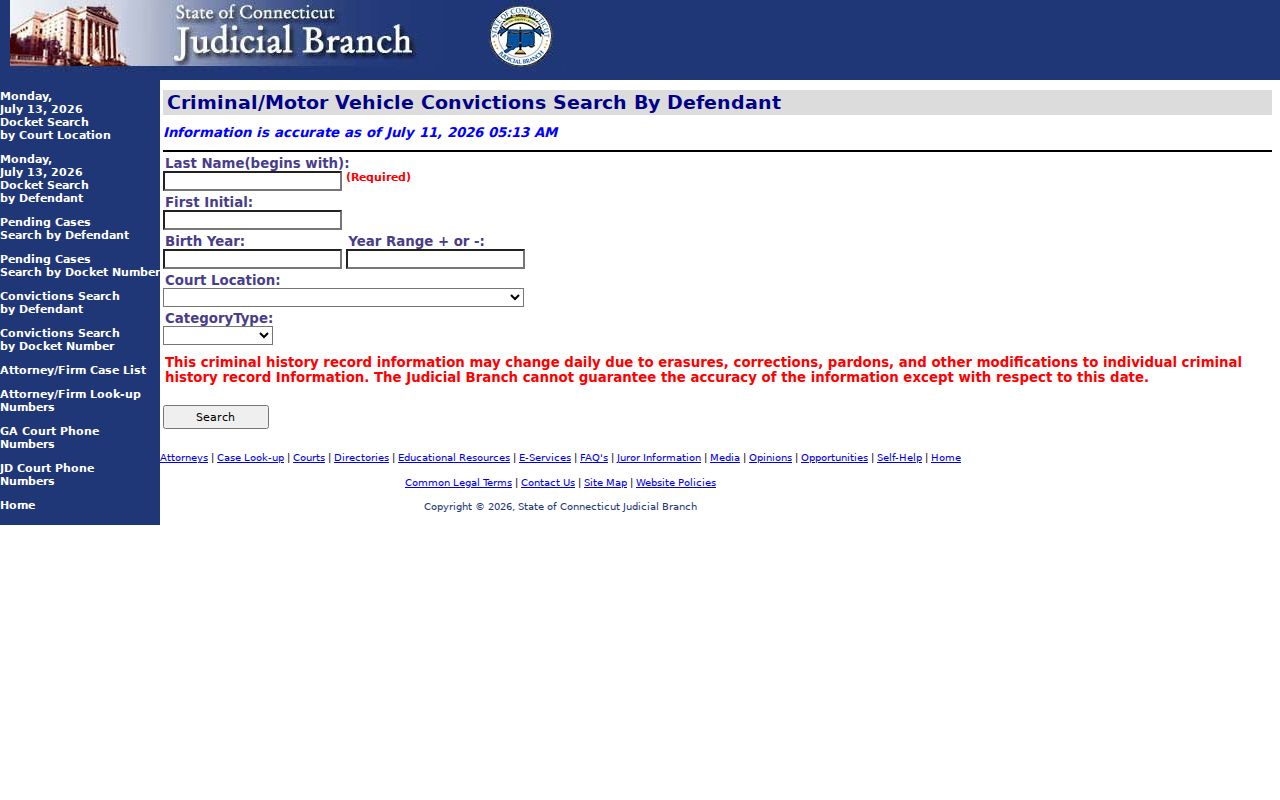
Conviction search is narrower than pending case lookup because it focuses on charges that resulted in conviction within the public display rules.
Charges vs Convictions
A charge is an accusation. A conviction is the result of a guilty plea, verdict, or other qualifying outcome. A City of New Britain criminal court record can show charges that were amended, reduced, dismissed, nolled, or otherwise resolved without conviction. The narrower charge path is covered in City of New Britain arrest records and court charges, while this page stays focused on the full criminal case file.
| Charge | Conviction | |
|---|---|---|
| Meaning | A formal accusation filed in court. | A guilt finding, guilty plea, or qualifying conviction outcome. |
| Timing | Appears early in the case and may change. | Appears after final disposition and sentencing rules apply. |
| Public display | May appear in pending case and daily docket paths. | Displayed through conviction lookup subject to Connecticut limits. |
| Risk of misread | Can be mistaken for guilt. | Can still be affected by erasure, correction, pardon, or display-period limits. |
Read Dispositions and Sentences
Disposition means the current or final outcome of a case or charge. Sentencing is the punishment or conditions ordered after conviction. A criminal court record may show that a matter is pending, dismissed, nolled, resolved by guilty plea, resolved by trial verdict, or moved into a sentence phase. Sentencing can include incarceration, probation, fines, restitution, conditions, or other court orders. Probation violations and failure to appear can create later docket activity and warrant records.
The conviction docket-number search supports direct lookup when the case identifier is known.
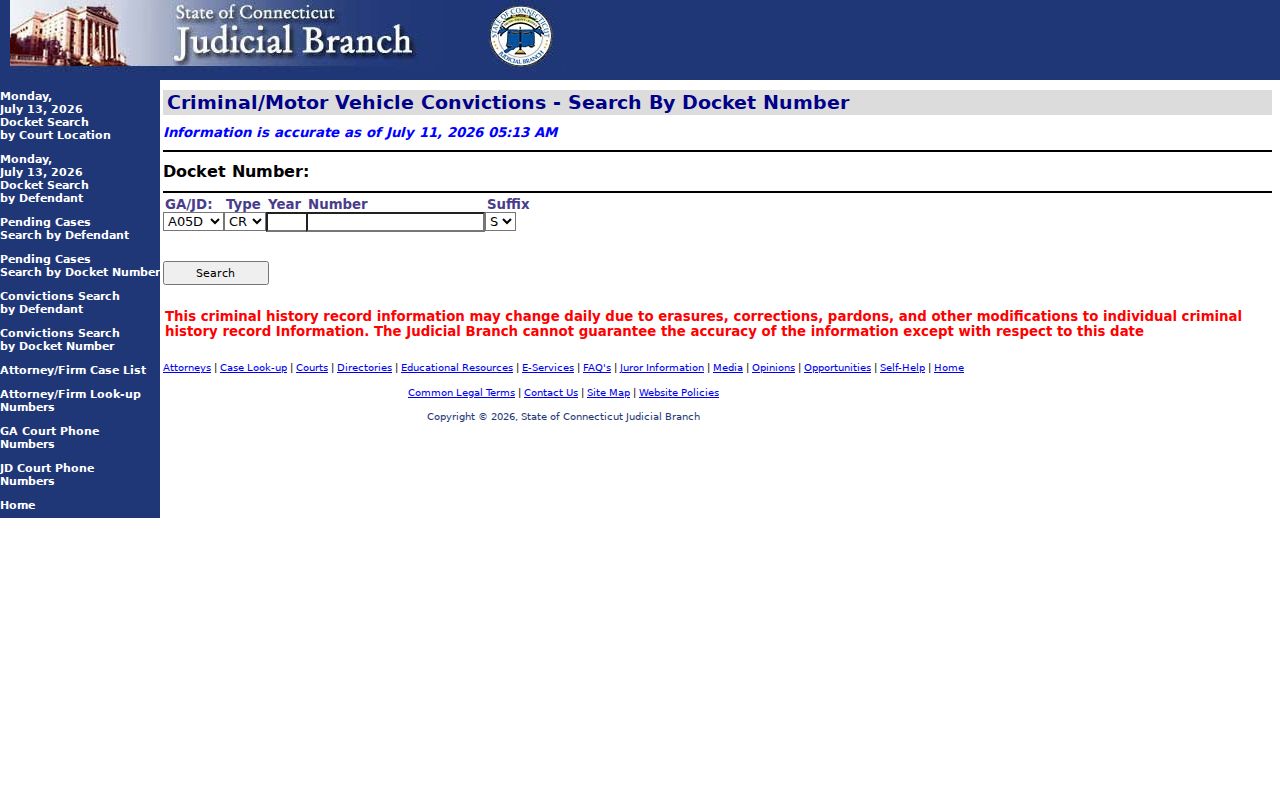
Docket-number searching is useful when a name search returns too many matches or when a court notice already lists the case identifier.
Sealed vs Erased Records
Connecticut research for New Britain uses erasure language rather than a simple expungement label. Sealed records are closed from public inspection by statute or court order. Erased criminal records are controlled by Connecticut General Statutes Section 54-142a. The criminal portal also warns that records can change daily because of erasures, corrections, pardons, and other modifications.
| Sealed | Erased | |
|---|---|---|
| Visibility | Closed to ordinary public view by law or court order. | Treated as inaccessible under Connecticut erasure rules when eligible. |
| Where noticed | May require clerk explanation or court order to inspect. | May disappear from public lookup, even if older records once appeared. |
| Common areas | Juvenile, family safety, victim, sealed filings, or protected information. | Eligible criminal matters affected by statutory erasure, pardon, correction, or clean-record processes. |
The assigned image from the Connecticut criminal erasure statute ties this access limit to the New Britain criminal court record workflow.
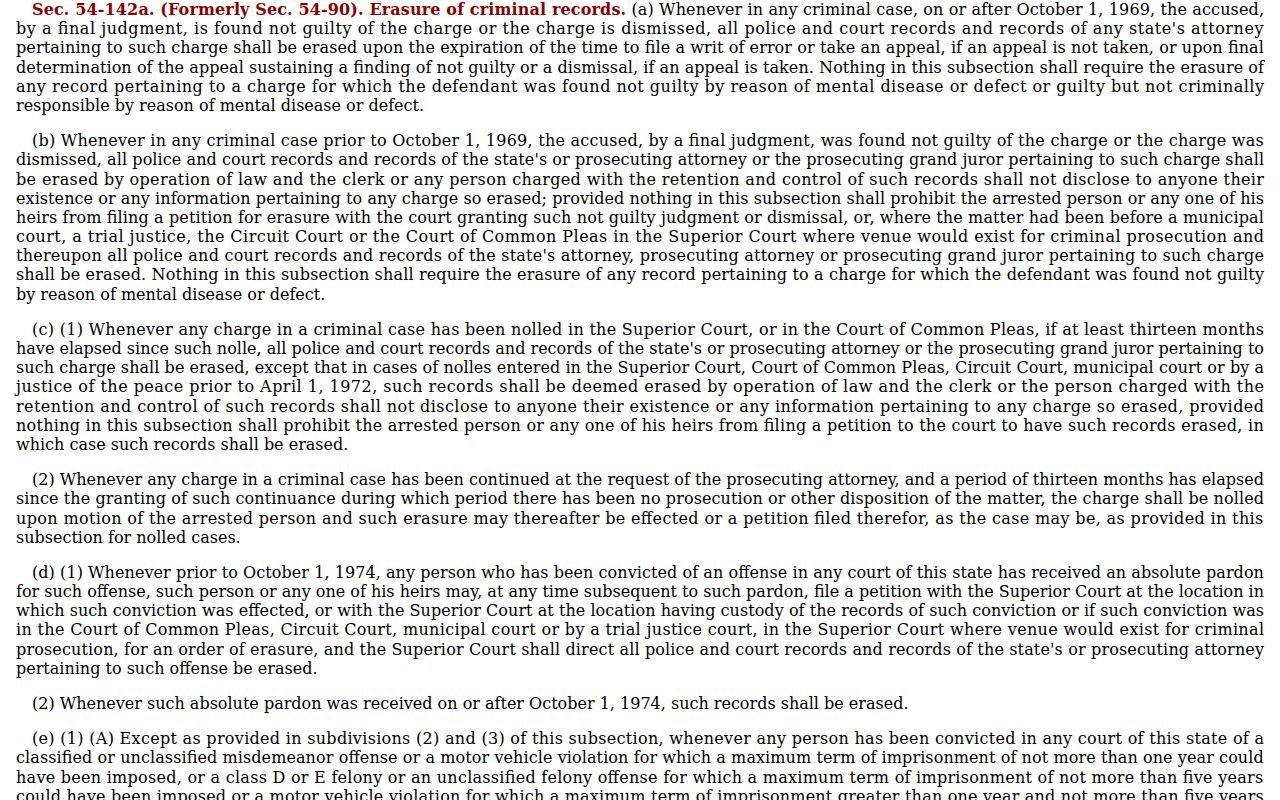
Erasure is one reason a past New Britain criminal court record may no longer appear in the public search result.
Access to New Britain Criminal Records
Public access depends on both the record holder and the record type. Court case records use Judicial Branch lookup tools and the Clerk of the Superior Court. Police reports use the New Britain Police Records Bureau. City-held records use the city FOIA channel. Court access is also limited by juvenile confidentiality, youthful offender exclusions, erased records, sealed filings, victim identity protections, and active-investigation rules for police records.
Key Statutes:
Conn. Gen. Stat. Section 1-210 - Connecticut public records are generally open unless another law or exemption applies.
Conn. Gen. Stat. Section 46b-124 - Juvenile records are confidential and not ordinary public records.
Conn. Gen. Stat. Section 54-142a - Erasure law controls access to eligible erased criminal records.
The New Britain Police weekly blotter is a police information channel, not a substitute for the criminal court file. The assigned NBPD blotter image shows that separate local source.
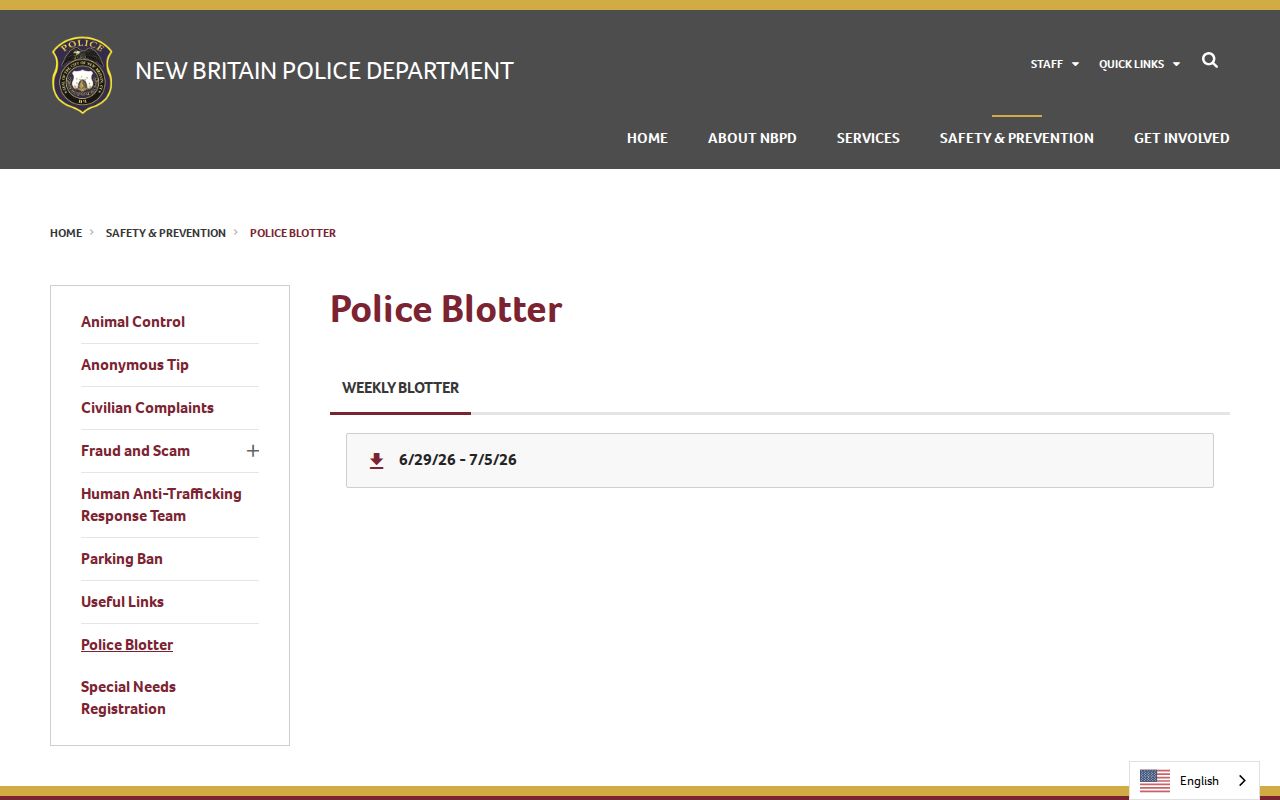
Use the blotter only as a police-facing lead. Confirm court charges, pleas, dispositions, and sentences through the Judicial Branch or clerk.
Restricted New Britain Criminal Records
Restricted criminal records include juvenile matters, youthful offender cases, sealed files, erased matters, some infractions and violations, protected victim details, active investigation records, confidential sources, and signed witness statements held by police. NBPD states that active investigations are usually not accessible and that juvenile arrest information must go to Juvenile Court. The Judicial Branch conviction page excludes youthful offender and juvenile cases from conviction lookup.
Do not assume a missing record means no arrest, no charge, or no case. It may mean the wrong court location was used, the case is sealed or erased, the matter is too new for an update, the record is police-held rather than court-held, or the full document requires a Clerk of the Superior Court request.